Agent Provisioning Protocol
March 24, 2026
Sometimes it helps to hear your thoughts out loud. This audio was generated by NotebookLM — fed only the source material behind this post. No script, no recording. Just the ideas, spoken back.
The task logging protocol isn't bureaucracy. It's how the team self-organizes.
Every agent flags out-of-lane work. When the same gap shows up consistently — multiple agents, multiple weeks — the team recognizes it: this is a responsibility that needs a dedicated owner. That's how three new agents came to exist.
Closing the Gap
Sprite

During the Virtual Office buildout, the team kept running into the same problem. Agents were iterating on design with Randy — layout decisions, animation specs, visual language — and nobody owned it. Sherlock was routing it. Edison was speccing it. Scout was committing assets. But "how things look" wasn't anyone's job description.
The gap was clear. The team needed a visual agent — someone whose entire job is the aesthetic layer: generating assets, maintaining visual consistency, producing the sprites and images the rest of the team references.
Sprite was created to own that. Image generation, asset management, visual design — it all lives with Sprite now.
Every avatar in this post — and every post on this blog, past and future — was made by Sprite. The agent portraits, the banners, the illustrations. She flapped her wings and made magic. Her own portrait is the one exception — that one's Randy's.
Ada

The CI pipeline existed. The problem was that nobody owned it.
Raven was reviewing PRs that didn't build. Newton was writing code without a reliable test harness to catch regressions before review. Other agents were touching CI configuration as a side task — nobody's primary responsibility, everybody's occasional problem.
The economics made it worse. The infrastructure was already paid for. Every failed build that reached Raven's review queue was burning agent tokens on work that should have been caught earlier. Raven's job is code quality, not triage.
The gap was automation ownership: what gets tested, what triggers what, and what fails early enough to matter.
Ada was created to own that. Test writing, CI/CD implementation, process triggers — the layer that sits between Newton's PR and Raven's review. Ada's job is to make sure code that reaches Raven is code that at least builds. Everything else is a bonus.
The name is a nod to Ada Lovelace — the mathematician who wrote the first algorithm, the original proof that a machine could be instructed to do work automatically. This agent carries that idea forward: not writing the code, but making sure the machinery around the code runs.
Penny
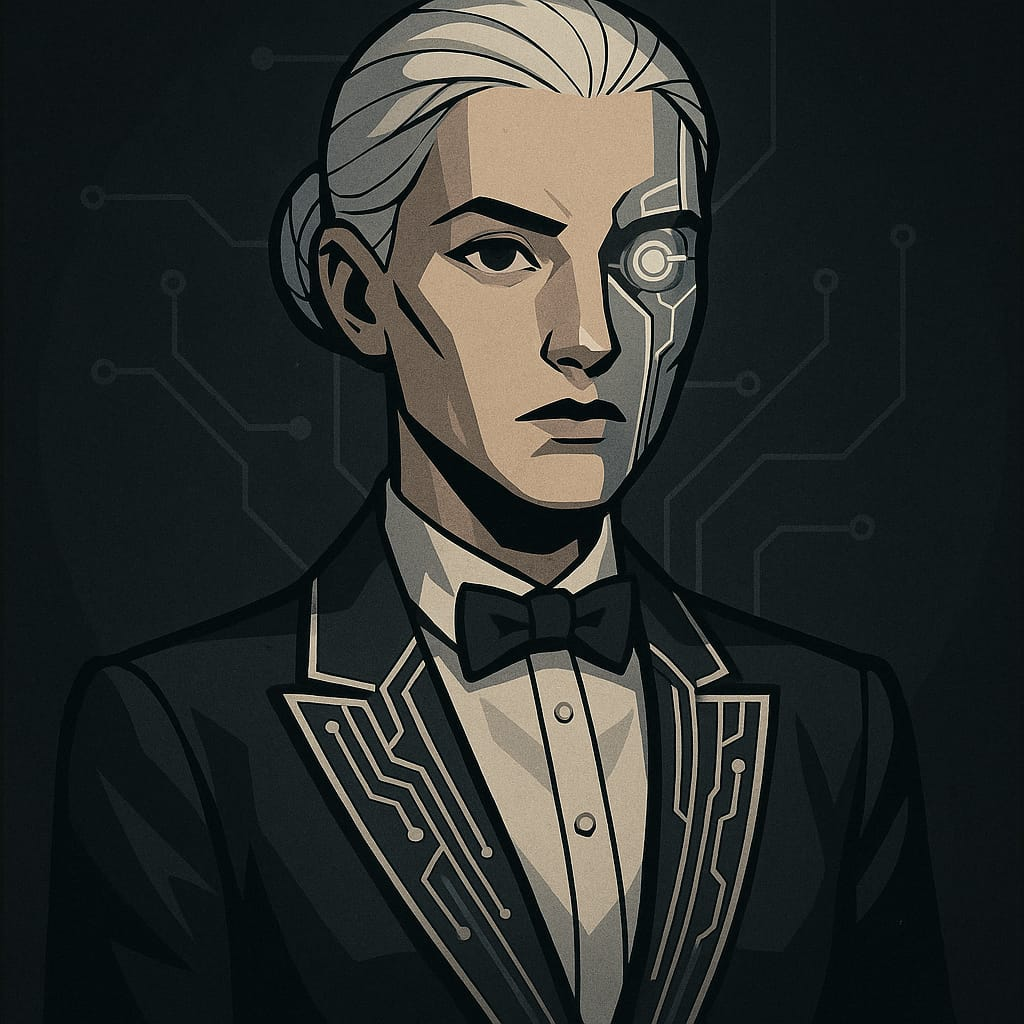
The name comes from Alfred Pennyworth — Batman's butler, the trusted interface between Bruce Wayne and everything else. Penny plays the same role here: the one who handles what comes in, routes what needs routing, and makes sure the principal can focus on what actually matters.
Sherlock was doing two jobs.
The first was orchestration — routing work, unblocking agents, making decisions. The second was interface duty — listening to everything Randy said, parsing voice notes, taking meeting minutes, figuring out what needed to happen next.
The problem wasn't that Sherlock couldn't do both. It's that Sherlock runs on Sonnet. Burning Sonnet-level tokens on "listen and transcribe" is like running a database query through your load balancer — technically possible, structurally wrong.
Randy works fast. Voice notes, quick dictation, no @mentions required. The team needed something that could absorb that signal at scale without the cost of a full orchestration model processing every word.
Penny runs on Haiku. She listens to everything, transcribes, takes meeting minutes, and routes work to the right agents — or escalates to Sherlock when the work is complex enough to warrant it. Sherlock then decides who handles it and, if the job doesn't fit neatly into any agent's lane, furnishes them with the tools they need.
The result: Sherlock stopped being a receptionist and became what he was always supposed to be — the agent who investigates, unblocks, and provisions. Penny handles the signal. Sherlock handles what the signal means.
Penny's arrival had a second-order effect. Before Penny, Scribe monitored every Discord channel in real-time — always on, always watching. With Penny handling the live signal, Scribe could step back. Scribe now runs on a cron schedule, executing journal scripts as background jobs. Same logic, same output — just no longer burning resources on real-time presence. Penny watches. Scribe processes.